
Bringing a sophisticated hardware product to market in today’s tech landscape feels a bit like building a plane while flying it. The lines between physical components, embedded software, and cloud connectivity have completely blurred. When a project involves tight space constraints, high power efficiency requirements, and advanced processing needs, the risk of hitting a development bottleneck sky-rockets.
At ADUK GmbH, we have spent years refining a system designed specifically to take the chaos out of high-stakes tech development. We do not believe in luck, and we certainly do not believe in rigid, old-school processes that fail the moment a real-world obstacle appears. Instead, our approach balances structured systems engineering with the flexibility required to solve problems that do not have a textbook answer.
Here is a look behind the curtain at how we break down complexity, de-risk development, and deliver reliable solutions for our clients.
1. The Discovery Phase: Deconstructing the Unknown
Every complex project begins with an inherent amount of ambiguity. A client might come to us with a brilliant conceptual idea or a high-level list of performance targets, but translating those ideas into a concrete engineering roadmap requires deep exploration.
We start by deconstructing the problem into its foundational components. Our engineers look closely at the interplay between three critical layers:
- The Physical Constraints: Form factor, thermal dissipation, component availability, and power budgets.
- The Operational Environment: Where will this device live? Does it need to withstand extreme temperatures, moisture, or high electromagnetic interference?
- The Software Ecosystem: From bare-metal firmware efficiency to data streaming protocols for cloud backends.
By treating these elements as an interconnected ecosystem rather than isolated tasks, we identify potential architectural conflicts before a single line of code is written or a schematic is drawn. This upfront clarity saves months of costly redesigns later in the lifecycle.
2. Micro-Milestones and De-Risking
The traditional “Waterfall” model, where everything is planned upfront and tested only at the very end, is a recipe for failure in modern tech development. If a critical hardware bug is discovered only during final integration testing, the entire project timeline blows up.
To prevent this, we break the development cycle into tight, manageable micro-milestones. We focus heavily on early proof-of-concept validation, particularly for high-risk features. For instance, if a project relies on a brand-new sensor or an unproven wireless protocol, we do not wait for the final custom PCB to test it. We build isolated test setups immediately to validate performance under real-world conditions.
This continuous validation loop ensures that when we move to the next phase of development, we are building on a foundation of proven data, not hopeful assumptions.
3. Bridging the Gap Between Hardware and Software
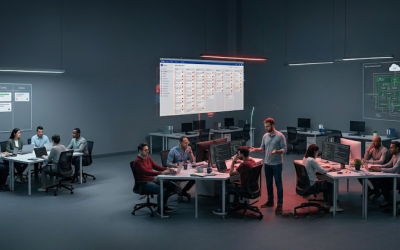
One of the most frequent points of failure in technical development is the disconnect between hardware teams and software teams. Hardware engineers design a board, hand it over to the firmware team, and cross their fingers. When something goes wrong, the blame game begins: Is it a hardware glitch or a software bug?
We eliminate this friction by maintaining a tight, cross-functional engineering loop. Our firmware specialists work alongside our hardware designers from day one. This integration ensures that the hardware layout is naturally optimised for efficient software development, leading to faster board bring-up times, cleaner code, and far fewer unexpected system crashes during integration.
Furthermore, this collaborative mindset is exactly what enables us to consistently deliver cutting-edge electronics development services that smoothly bridge the gap from initial concept to a market-ready product.
4. Designing for Manufacture and Long-Term Reliability
A solution is only successful if it can be reliably manufactured at scale and maintained in the field for years to come. It is easy to build a prototype that works perfectly on a laboratory bench under ideal conditions. It is a completely different challenge to build thousands of units that perform flawlessly in the real world.
Every decision we make is guided by Design for Manufacturing (DFM) and Design for Testing (DFT) principles. We meticulously analyse component lifecycles to ensure our clients are not left stranded by sudden supply chain shortages. We design custom automated test fixtures alongside the product itself, ensuring that every unit rolling off the production line meets identical quality standards.
Driving Business Growth Through Technical Execution
Ultimately, solving engineering problems is not just about writing elegant code or designing beautiful circuit boards: it is about enabling business success. Complex technical hurdles translate directly to commercial risks: delayed launches, blown budgets, and missed market opportunities.
By partnering with an experienced engineering team, companies can shift their focus away from firefighting technical crises and toward scaling their business operations. Whether it is accelerating time-to-market, reducing production costs, or implementing next-generation features that leave competitors behind, our ultimate goal is to turn technical complexity into a distinct competitive advantage for our clients.