Imagine spending months engineering a flawless physical product. You select the best microcontrollers, design a beautiful multi-layer PCB, and choose premium components that can handle extreme environments. The hardware is a masterpiece.
Then, you launch it.
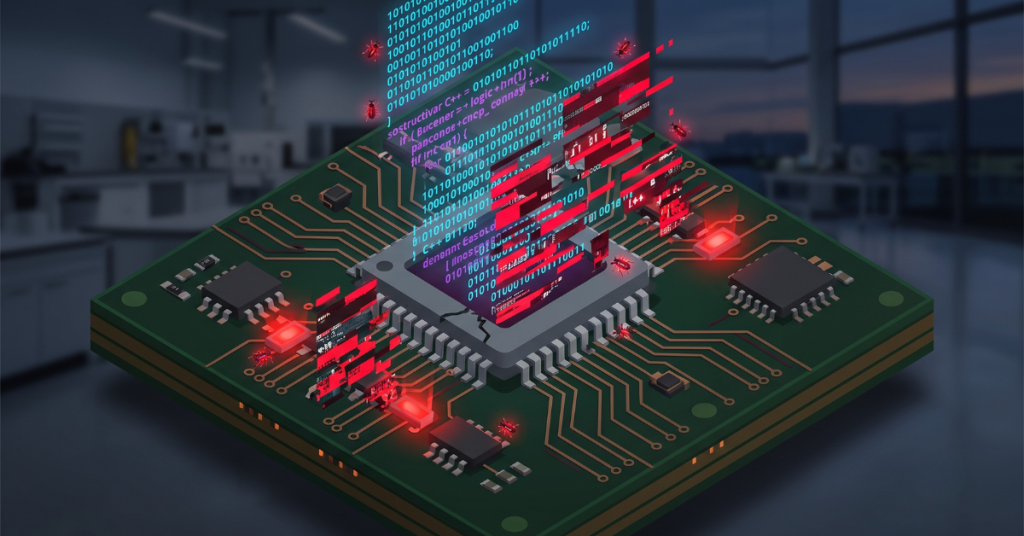
Within weeks, customer support lines light up. Devices are freezing, batteries are draining overnight, and some units are completely unresponsive. The hardware components are not failing. Instead, the culprit is invisible code: unstable firmware.
In the world of embedded systems, hardware is only as good as the software running on it. When software bugs invade physical products, the consequences are far more severe than a crashing mobile app. Here is a look at why firmware instability is a quiet profit killer, and how you can protect your investment.
The Costly Illusion of “Fixing It Later”
In pure software development, the “move fast and break things” mentality is common. If a web application has a bug, developers push a hotfix to the cloud, and the user barely notices.
Hardware does not work that way. When firmware goes wrong in the field, the costs scale exponentially.
- The Over-the-Air (OTA) Trap: Many companies assume that OTA updates solve everything. But what happens if a bug breaks the network stack? If a device cannot connect to the internet, it cannot receive the fix. You now have a bricked device that must be physically returned or serviced.
- Battery Drain and Stress: Firmware bugs can prevent microcontrollers from entering low-power sleep modes. A battery designed to last five years might die in five weeks, forcing expensive manual replacements.
- Physical Damage: In industrial or automotive applications, bad code can cause physical destruction. If a thermal management routine fails to execute because of a software deadlock, premium components can literally burn out.
Why Do Good Hardware Teams Struggle with Firmware?
The root cause is rarely a lack of talent. It is a misalignment of disciplines. Hardware engineering requires a deep understanding of physics, electronics, and manufacturing tolerances. Embedded software engineering, however, requires a deep understanding of timing, memory constraints, and race conditions.
When companies treat firmware as an afterthought, they often cut corners on architectural planning and testing. Without rigorous simulation and continuous integration, edge cases slip through. A device might work perfectly on an engineer’s desk but fail completely when thousands of units start communicating simultaneously in the real world.
To prevent these issues, smart businesses bring in specialised partners early in the development lifecycle. This is exactly where the team at ADUK GmbH steps in, bridging the gap between complex hardware design and bulletproof embedded code to ensure your product performs flawlessly from day one.
The Brand Damage is Hard to Repair
The financial hit from recalls and warranty claims is painful, but the damage to your reputation can be permanent. In the B2B sector, an unstable product line can cost you long-term contracts. In the B2C market, a wave of one-star reviews detailing “device freezes” or “failed connectivity” will kill a product launch before it even gains momentum.
Customers do not care if the physical sensor is high quality when the product fails to deliver data. To the end user, the hardware and software are a single entity. If the firmware is broken, the product is broken.
Achieving Stability through Rigorous Engineering
Building stable firmware requires a systematic approach. You cannot simply patch bugs as they appear. You must design the system to resist failure from the start.
- Strict Architectural Separation: Isolate critical system functions from non-critical tasks. A bug in a user interface module should never be able to freeze a safety-critical control loop.
- Hardware Watchdogs: Use independent hardware timers that automatically reset the system if the software stops responding.
- Defensive Programming: Assume that things will go wrong. Validate all sensor inputs, handle memory allocation with extreme caution, and write robust error logging systems.
- Automated Testing: Run firmware through rigorous automated test suites that simulate real-world stress, network drops, and power fluctuations.
Investing in these practices early saves thousands of hours of troubleshooting later. By partnering with external experts like ADUK GmbH, companies can access established testing frameworks and deep engineering expertise without expanding their internal overhead.
Conclusion: Hardware Needs Great Software
Premium hardware deserves premium firmware. Skimping on the software side of an embedded device is a gamble that rarely pays off. If you want to protect your development budget, secure your brand reputation, and deliver products that last, firmware stability must be a priority from day one.