The electronics industry is at a crossroads. As our world becomes increasingly interconnected and digitised, the demand for embedded systems from smart sensors and IoT devices to complex industrial controls continues to soar. While these innovations bring undeniable benefits, they also come with a significant environmental cost. The lifecycle of an electronic device, from raw material extraction and manufacturing to energy consumption and eventual disposal, contributes heavily to resource depletion, carbon emissions, and e-waste.
This reality presents a critical challenge and a monumental opportunity for embedded engineers. The shift towards sustainability is no longer a niche concern but a fundamental imperative. Can embedded engineering, the bedrock of modern electronics, truly go green? The answer is a resounding yes, but it requires a holistic re-evaluation of our design philosophies and a commitment to innovation across the entire product lifecycle.
The Sustainability Challenge in Embedded Systems
To understand how embedded engineering can become sustainable, we must first dissect the key areas where the current model falters:
- Material Extraction and Manufacturing: The mining of rare earth minerals, heavy metals, and conflict minerals is often environmentally destructive and ethically problematic. Furthermore, the manufacturing processes, particularly in semiconductor fabrication, are highly energy- and water-intensive.
- Energy Consumption: While individual embedded devices often consume little power, their sheer volume adds up. The powering of data centres and the IoT ecosystem is a massive and growing drain on global energy resources, much of which is still fossil fuel-dependent.
- E-Waste Crisis: The rapid pace of technological obsolescence leads to mountains of e-waste, much of which is improperly disposed of. This waste contains hazardous substances like lead and mercury, which leach into the environment, and valuable materials that are lost to the circular economy.
Green Design Principles for Embedded Engineers
The transition to sustainable electronics starts at the design stage. Embedded engineers hold the power to bake sustainability into the core of a product.
1. Low-Power Design and Energy Harvesting
This is arguably the most direct way to reduce a device’s environmental footprint during its operational life.
- Ultra-Low-Power (ULP) Components: Selecting microcontrollers, sensors, and communication modules specifically designed for minimal power draw is crucial. Techniques like duty-cycling, where the device spends most of its time in a deep-sleep mode, and only wakes up periodically to perform tasks, are standard practice.
- Energy-Efficient Algorithms: Optimising software and firmware is just as important as hardware selection. Efficient algorithms reduce the time the CPU needs to be active, thereby conserving power.
- Embracing Energy Harvesting: Moving away from reliance on disposable batteries is a game-changer. Embedded systems are uniquely positioned to leverage ambient energy sources (solar, thermal, kinetic, and radiofrequency) to power themselves. This eliminates the manufacturing, replacement, and disposal costs associated with batteries.
2. Material Selection and Circularity
Engineers must move beyond pure performance and cost considerations when choosing materials.
- Sustainable and Recycled Components: Prioritising components made from recycled plastics or metals, or those sourced from suppliers with transparent and ethical supply chains, is essential. For Printed Circuit Boards (PCBs), engineers can explore substrates with lower environmental impact than traditional FR4.
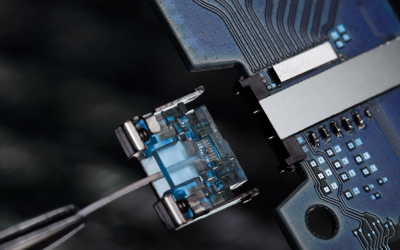
- Designing for Disassembly and Repairability: The concept of Design for Circularity (DfC) means making a product easy to take apart. Connectors should replace soldering where possible, and standardised parts should be favoured over proprietary ones. A modular design allows a single faulty component to be replaced, extending the life of the entire device. This ethos directly combats the ‘throwaway’ culture.
- Minimising Component Count: Simple is often better. Reducing the number of integrated circuits and passive components lessens the demand for raw materials and simplifies the eventual recycling process.
3. Software Longevity and Over-The-Air (OTA) Updates
Sustainability isn’t just about the physical hardware; it’s about the software that defines its lifespan.
- Future-Proofing Firmware: Writing robust, well-documented, and modular firmware ensures that the device can remain useful for longer. This includes using standardised protocols and APIs that are likely to be supported for years.
- Enabling OTA Updates: The ability to push software updates wirelessly is vital for fixing bugs, patching security vulnerabilities, and, crucially, adding new features that extend the device’s functional life. This prevents consumers from needing to replace a device simply because a new software standard or feature has emerged.
The Role of ADUK in the Green Transition
The challenges of sustainable design can feel immense, particularly for small to medium-sized enterprises (SMEs) and start-ups. However, platforms dedicated to connecting expertise and resources are key to accelerating the transition.
At ADUK, we recognise that the foundation of a greener electronics future lies in accessible knowledge and shared best practices. By fostering a community where engineers, manufacturers, and component suppliers can exchange insights on low-power design techniques and the sourcing of eco-friendly materials, we can collectively lower the barrier to entry for sustainable engineering. Our goal is to make green design the default, not the exception.
The Path to a Circular Economy
The ultimate goal for embedded electronics is to move away from the linear “take-make-dispose” model and fully embrace the Circular Economy.
- Product-as-a-Service (PaaS): Instead of selling a physical device, companies can sell the function it provides. The company retains ownership of the hardware, making it financially beneficial for them to design products that last longer, are easily repaired, and can be efficiently refurbished or recycled. This shifts the economic incentive away from planned obsolescence.
- Closed-Loop Recycling: This involves designing components specifically so that their constituent materials can be recovered, refined, and fed back into the manufacturing process for new devices. While challenging, particularly for complex PCBs, advancements in automated disassembly and material separation technologies are making this a more viable reality.
The future of embedded systems must prioritise durability over disposability, and efficiency over excess. Engineers must view sustainability not as a limitation, but as the next great frontier for innovation. By adopting ULP design, choosing materials wisely, and designing for repair and reuse, we can ensure that the technology powering our future is one that protects the planet, not depletes it. The embedded engineering community has the expertise; the moment to go green is now.